Portions without a scale: how to measure food with your hand
Your hand is the measuring tool you always carry. Here's how Mexico's IMSS uses it to size portions, how accurate it is, and how to apply it to Mexican food.
The short version
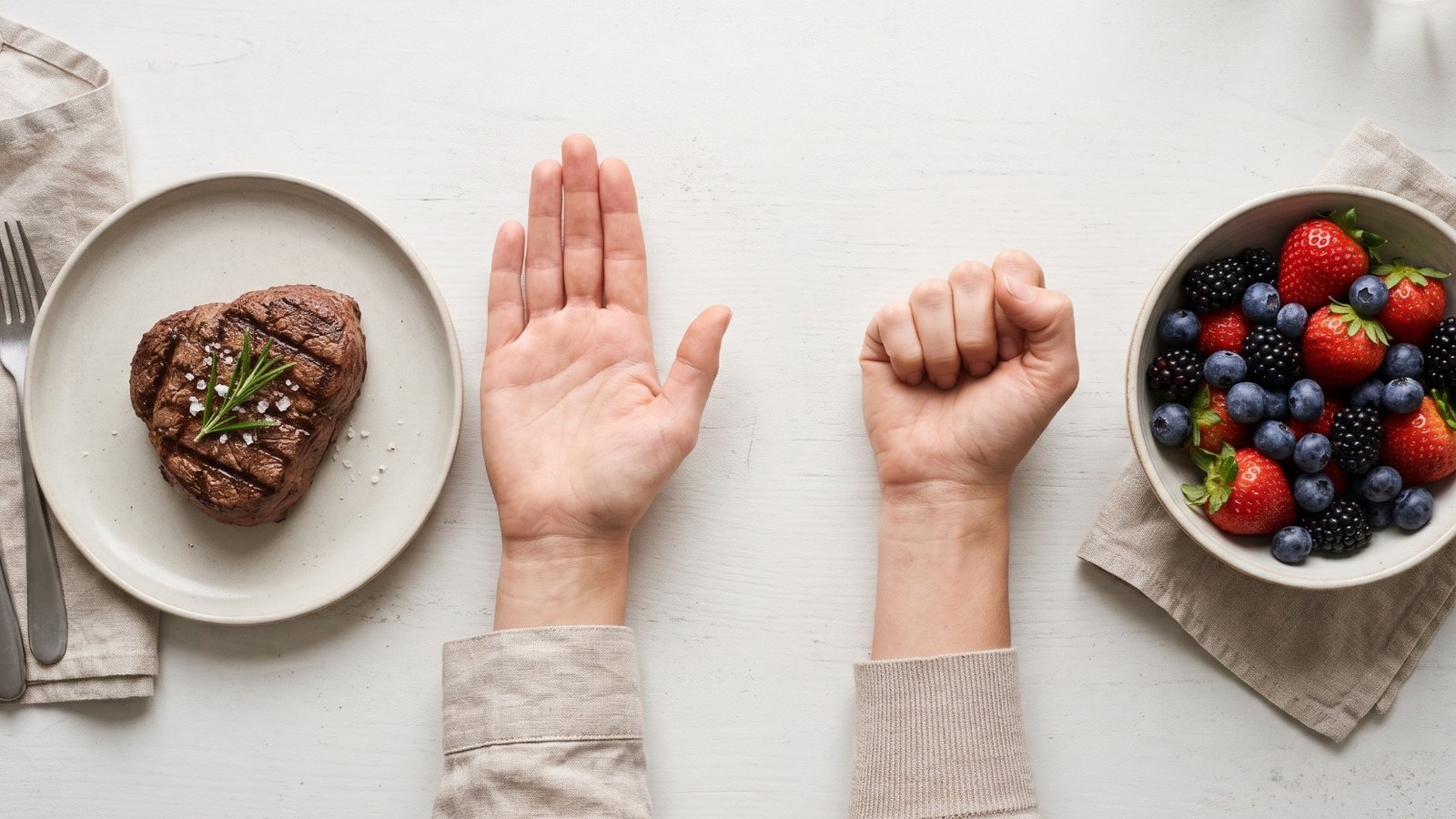
- IMSS suggests measuring with your hand: a fist of fruit (1 cup), a cupped palm of rice or beans (½ cup), a palm as thick as your little finger of meat (90 g) and a thumb of oil, cream or sugar (1 teaspoon).
- It's an estimate, not a scale: in a study with clearly shaped foods, the best hand method put 8 in 10 estimates within 25% of the true weight; cups and spoons managed only 3 in 10.
- Fat is what slips through most: a thumb of oil is about 40 kcal and a tablespoon about 120.
- Tortillas don't need your hand: count them. A 30 g corn tortilla is about 50 kcal.
Why the portion matters as much as the dish
Two plates of Mexican rice can be the same dish and have double the calories: it all depends on how much you serve. In the CalorIA Scan database, a cup of Mexican rice (180 g) is about 280 kcal; half a cup, about 140.
Weighing everything is the most accurate option, but almost nobody does it every day, let alone at a fonda or at a family dinner. That's why there's a measuring tool you always carry: your hand.
The IMSS hand guide
IMSS, Mexico's social security health system, has a simple guide for estimating portions at main meals with your hand:
- Fruit: a fist. About 1 cup (240 ml).
- Vegetables: two cupped palms together. 1 cup.
- Pasta, rice, oats, beans, fava beans or lentils: one cupped palm. ½ cup.
- Cooked meat, chicken, fish, tuna or sardines: a palm as thick as your little finger. About 90 g.
- Milk: a fist. A 240 ml glass.
- Oil, butter, mayonnaise, cream, sugar, honey or piloncillo: a thumb. 1 teaspoon.
Keep in mind: the guide tells you how big a portion is, not how many portions you should eat. That depends on your age, activity and goals, and it's best worked out with a professional.
What it looks like with Mexican food
To give you an idea, using values from the CalorIA Scan database:
- A palm of carne asada (90 g): about 130 kcal.
- A cupped palm of refried beans (½ cup): about 100 kcal.
- A cupped palm of Mexican rice (½ cup): about 140 kcal.
- Two palms of pico de gallo (1 cup): about 30 kcal.
- A fist of fruit: for example, a medium banana, about 105 kcal.
Tortillas are easier: count them. A 30 g corn tortilla is about 50 kcal; three tortillas, about 150.
How accurate is your hand?
It's an estimate, not a scale. Hands differ in size from person to person, and measuring something with a clear shape, like a steak or a piece of bread, is not the same as measuring a stew or a mound of rice.
The science backs it, with nuance. In a University of Sydney study published in the Journal of Nutritional Science (2016), 67 people estimated 42 pre-weighed foods and drinks. The most accurate method was using finger width as a ruler: with it, 80% of estimates for geometrically shaped foods landed within 25% of the true weight, versus 29% with cups and spoons. The authors conclude it's useful but still needs fine-tuning.
The practical lesson: your hand gets you much closer than guessing, and it's enough for everyday life. If you need precision, for example on medical advice, use a scale or measuring cups.
The mistakes that slip through most
- The fat you don't see: oil in the stew, lard in the beans, a crispy fried tortilla. Fat has 9 kcal per gram: a thumb of oil (1 teaspoon) is about 40 kcal and a tablespoon about 120.
- Second helpings: the second portion counts just like the first.
- Creamy sauces and dressings: measure them with your thumb, not the ladle.
- Drinks: they have portions too. We covered that in the calories you drink.
- Snacking while you cook: the little tastes add up too.
 With CalorIA Scan
What CalorIA Scan does for you
- Scan your plate: take a photo and the app estimates calories and macros, built for real Mexican food.
- Adjust the portion, with your hand as a guide: if you served yourself two palms of rice instead of one, fix the portion (from ½ to 5) and everything recalculates instantly.
- Adjust ingredients: remove the cream or swap the tortilla and the count updates.
- See your whole day: on Home you compare your calories with your goal and see how many you have left.
- Follow your protein: the Protein tracker shows where it comes from.
Values are AI estimates. Your hand and the app work together: the photo estimates, and you decide whether the portion looks like what you actually ate.
The practical takeaway
You don't need a scale to stop guessing. A fist, a palm and a thumb give you a clear idea of how much you serve, especially with oil, which is what slips through most. Use them alongside CalorIA Scan and adjust when you need to.
Stop guessing your calories
CalorIA Scan reads your plate from a photo and gives you calories and macros tuned for real Mexican and Latino food — where generic apps get it wrong.
Get CalorIA Scan freeSources
- IMSS — Food portions: use your hands to measure portion size (infographic), in Spanish
- Gibson AA, et al. Accuracy of hands v. household measures as portion size estimation aids. Journal of Nutritional Science, 2016
- ScienceDaily — University of Sydney: finger width to estimate portions, July 2016
- MedlinePlus — Dietary fats explained: 9 calories per gram of fat
Post on Instagram
Copy the text, download the image, then open Instagram and paste it. Instagram does not allow clickable links in captions: add the article link as a link sticker on a Story, or keep it in your bio.
Keep reading
- 🫘MythsAre beans a protein or a carb? The answer, with numbers
- 🎄HealthGuadalupe-Reyes marathon: how much weight you gain and how to avoid it
- 🫔HealthPosadas calories: tamales, ponche and buñuelos
- ⚖️HealthCalorie deficit: what it is, why it matters and how CalorIA Scan helps you track it
This article is informational and not medical advice. Consult a doctor or registered dietitian before changing your diet, especially with a pre-existing condition.
Comments