Are beans a protein or a carb? The answer, with numbers
It's one of the fastest-growing nutrition questions in Mexican searches. Beans are both, and knowing how much of each they give you helps you build a better plate.
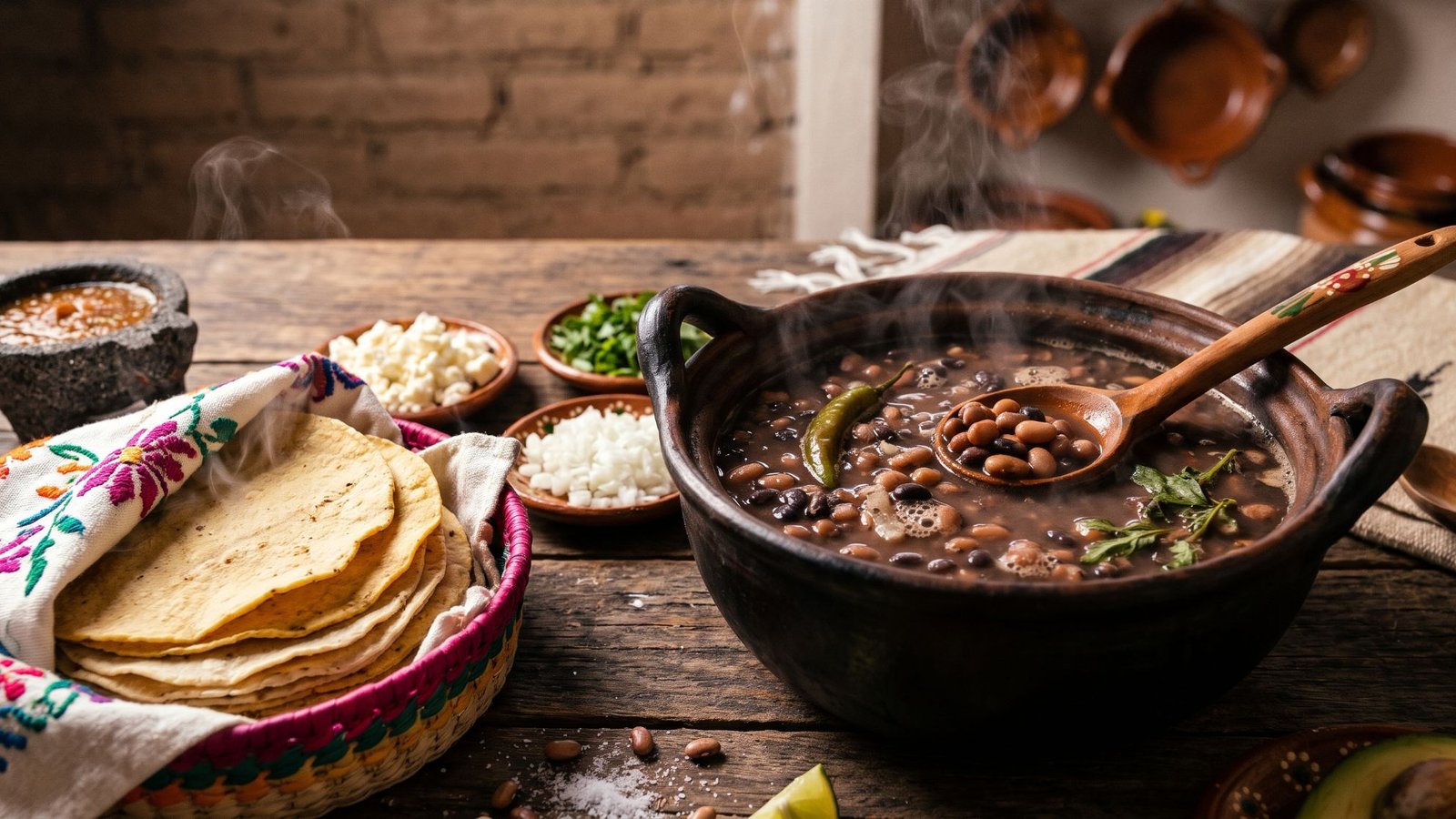
The short version
- They're both: a cup of cooked black beans has about 41 g of carbs (15 of them fiber) and 15 g of protein, according to the USDA.
- By calories, carbs weigh more: about 7 in 10 calories in beans come from carbs, and nearly 3 in 10 from protein.
- That's why dietary guides treat them separately: in Mexico's 2023 healthy plate, legumes have their own group, and the U.S. guide counts them as a vegetable or a protein.
- With tortillas they make a team: corn and beans complement each other in the amino acids each one lacks.
The short answer: both
Beans are a legume, and legumes don't fit in a single box. According to the USDA, 100 g of cooked black beans has about 132 kcal, 23.7 g of carbohydrate (8.7 of it fiber), 8.9 g of protein and barely half a gram of fat. A cup (172 g) is about 227 kcal, 41 g of carbs, 15 g of fiber and 15 g of protein.
Looked at by calories, about 7 in 10 come from carbohydrate and nearly 3 in 10 from protein. Strictly speaking, beans provide more carbs than protein. But they aren't just any carb: a good share is fiber, the nutrient almost nobody gets enough of.
Why dietary guides set them apart
In the new Plato del Bien Comer, the healthy plate of Mexico's 2023 dietary guidelines, legumes have their own group, separate from grains and from animal foods.
In MyPlate, the U.S. guide, beans, peas and lentils count in two groups: as a vegetable and as a protein. Its rule is practical: if you already get enough protein from other foods, count them as a vegetable; if you're short, count them as protein.
How they compare with other proteins
Using USDA data and the CalorIA Scan database, this is what protein looks like in typical portions:
- ½ cup of pot beans (86 g, one cupped palm): about 7.6 g of protein and 114 kcal.
- ½ cup of cooked lentils (99 g): about 8.9 g of protein and 115 kcal.
- 1 large egg (50 g): about 6.3 g of protein and 72 kcal.
- 30 g of queso fresco: about 6 g of protein and 70 kcal.
- 90 g of roasted chicken breast (one palm): about 28 g of protein and 149 kcal.
- 1 corn tortilla (30 g): 1 g of protein and 50 kcal.
The difference is density: per 100 kcal, chicken breast gives about 19 g of protein; egg, about 9; beans, about 7. Beans add protein, but to reach the same amount you need more calories than with chicken or eggs.
Refried beans vary by recipe, because lard or oil adds fat. For reference, in the CalorIA Scan database a cup of refried beans (180 g) comes in at 200 kcal, 10 g of protein and 6 g of fat.
Tortillas and beans: a team with history
Corn protein is low in two essential amino acids, lysine and tryptophan. Bean protein has plenty of both, but it's low in sulfur amino acids such as methionine, which corn does provide. That's why, as the FAO explains, they complement each other: the mix has better-quality protein than either one alone.
There's no need to obsess over combining them in every bite, either. The U.S. Academy of Nutrition and Dietetics calls the terms "complete" and "incomplete" protein misleading, and notes that well-planned vegetarian diets usually meet protein needs when enough calories are eaten.
So how should I count them?
- If you eat meat, chicken, fish or eggs at most meals: count beans as your legume and fiber portion, not your main protein.
- If you eat little meat: beans, lentils and chickpeas can be among your main protein sources; pair them with tortillas or rice, and with eggs or dairy when you can.
- Measure the portion: half a cup of cooked beans fits in one cupped palm.
- Watch what comes with them: cheese, cream, chorizo or tortilla chips push the calories up.
How much protein do you need? A healthy adult, about 0.8 g per kilo of body weight a day. We explain it in why it's worth tracking your protein.
 With CalorIA Scan
What CalorIA Scan does for you
- See your plate's macros: take a photo and the app estimates calories, protein, carbs and fat, built for real Mexican food.
- Follow your protein: the Protein tracker shows where it comes from: how much from beans, how much from eggs, how much from meat.
- Track your fiber: the app estimates fiber and sugars among 13 tracked nutrients.
- Adjust ingredients and portions: pot beans or refried, with cheese or without, change it; portions go from ½ to 5.
Values are AI estimates: if your beans are homemade, adjust the ingredients to get closer to your recipe.
The practical takeaway
Beans are carbohydrate and protein at the same time, with lots of fiber and almost no fat when they're cooked plain. They don't replace chicken or eggs gram for gram, but they're a good source of plant protein, especially with tortillas. Count them, measure the portion and make the most of them.
Stop guessing your calories
CalorIA Scan reads your plate from a photo and gives you calories and macros tuned for real Mexican and Latino food — where generic apps get it wrong.
Get CalorIA Scan freeSources
- USDA FoodData Central — Beans, black, mature seeds, cooked, boiled, without salt
- USDA FoodData Central — Lentils, mature seeds, cooked, boiled, without salt
- USDA FoodData Central — Egg, whole, raw, fresh
- USDA FoodData Central — Chicken, broilers or fryers, breast, meat only, cooked, roasted
- Healthy and Sustainable Dietary Guidelines for the Mexican Population 2023 (SSA, INSP, UNICEF) — infographic, in Spanish
- MyPlate (USDA) — Beans, Peas, and Lentils
- FAO — Maize in human nutrition (1992): improving maize-based diets
- Melina V, Craig W, Levin S. Position of the Academy of Nutrition and Dietetics: Vegetarian Diets. J Acad Nutr Diet, 2016
Post on Instagram
Copy the text, download the image, then open Instagram and paste it. Instagram does not allow clickable links in captions: add the article link as a link sticker on a Story, or keep it in your bio.
Keep reading
- 🎄HealthGuadalupe-Reyes marathon: how much weight you gain and how to avoid it
- 🫔HealthPosadas calories: tamales, ponche and buñuelos
- ⚖️HealthCalorie deficit: what it is, why it matters and how CalorIA Scan helps you track it
- ☕HealthThe calories you drink: what's in your glass that almost nobody counts
This article is informational and not medical advice. Consult a doctor or registered dietitian before changing your diet, especially with a pre-existing condition.
Comments