The calories you drink: what's in your glass that almost nobody counts
Latte, atole, agua fresca, soda: liquids add up too. Here's how to work it out and what WHO and the Mexican dietary guidelines say.
The short version
- Sugary drinks bring calories you barely feel: they fill you up less than solid food, and it's easy not to make up for them later.
- The 2023 Dietary Guidelines for the Mexican Population recommend drinking plain water throughout the day and with meals instead of soda, juice, powdered-mix drinks and sports drinks. WHO says free sugars should stay under 10% of your calories.
- To work out a drink, read the label per 100 ml or add up its ingredients. CalorIA Scan does it from a photo and shows where each calorie comes from.
Why liquid calories go unnoticed
When you eat, your body registers fullness. It does so less with drinks: according to Harvard T.H. Chan, people who drink sugary beverages don't feel as full as if they had eaten the same calories from solid food, and they tend not to eat less afterward to make up for it. That's why an "innocent" glass can add quite a bit to your day without you realizing.
Latte: where the calories really come from
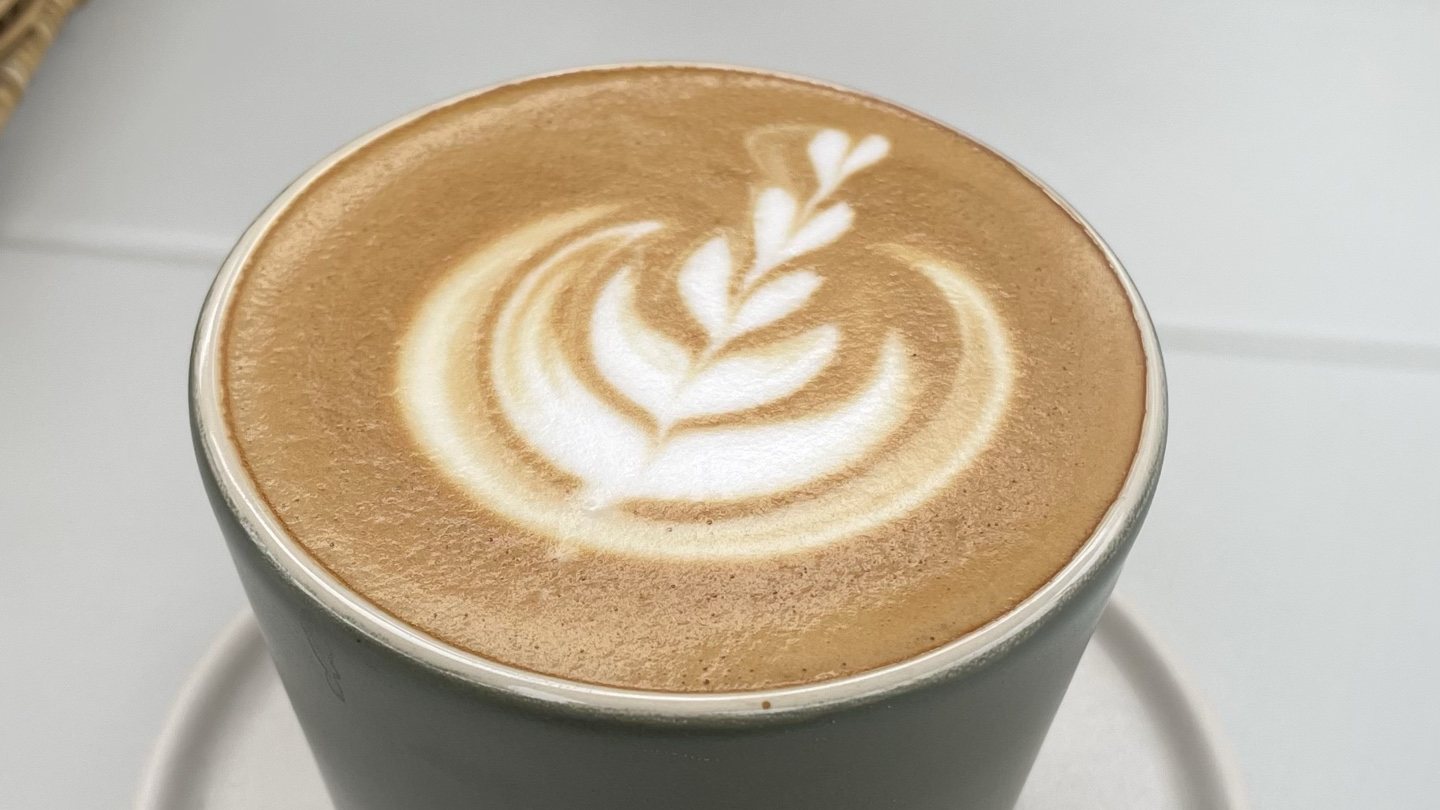
A real example: we scanned a one-cup latte (240 ml) with CalorIA Scan. The app estimated 120 kcal and 6 g of protein, and the breakdown shows that 118 of those 120 kcal come from the milk (200 g); the espresso adds just 2 kcal. If the cup is 1.5 times bigger, the estimate goes up to 180 kcal.
Black coffee barely counts: what adds up is what you put in it. Each gram of sugar provides about 4 kcal, so a level tablespoon (about 12.5 g) adds around 50 kcal, not counting milk, cream or syrups.
Aguas frescas, atole and champurrado: the recipe decides
There is no single number here. A jamaica (hibiscus) water, a horchata or an atole can have few calories or many, depending on how much sugar, piloncillo, milk, masa or chocolate goes in. Look up the same atole in public databases and you'll see very different figures, precisely because every recipe is different.
An example to do the math (hypothetical, not a reference recipe): a 2-liter pitcher of agua fresca with 1 cup of sugar, about 200 g. That's roughly 800 kcal in total. Split into 8 glasses of 250 ml, each glass carries about 25 g of sugar and about 100 kcal. If your recipe uses less sugar, the math goes down; what matters is doing it.
Atole and champurrado work similarly, and they also change depending on whether they're made with water or milk. That's why it's best to log your recipe ingredient by ingredient rather than trust a generic number.
Soda: the easiest math to do
Here there is a label: original Coca-Cola from Coca-Cola Mexico declares 42 kcal and 10.5 g of sugars per 100 ml. For a 600 ml bottle, multiply by 6 (our calculation from those figures): about 252 kcal and 63 g of sugar. That is more than WHO suggests as a ceiling for free sugars in a 2,000 kcal day: under 10%, which is under 50 g.
It's the same logic as our articles on fresh juice vs. whole fruit and zero soda: what matters is knowing how much is in the glass.
What WHO and the Mexican guidelines recommend
WHO recommends that free sugars —those added to foods and drinks, plus the sugars in honey, syrups and fruit juices— stay below 10% of your daily energy, and suggests that going below 5% could bring additional benefits (this second recommendation is conditional).
The 2023 Healthy and Sustainable Dietary Guidelines for the Mexican Population (SSA, INSP and UNICEF) ask people to drink plain water throughout the day and with all meals, instead of soda, juice, powdered-mix drinks and sports drinks.
That doesn't mean you can never enjoy an atole in season or a latte: it means knowing how much it is and deciding with information.
How to work out your drinks without obsessing
- If it has a label: read calories and sugars per 100 ml and multiply by the ml in your container.
- If you make it at home: add up what goes in —sugar, piloncillo, milk, honey, chocolate—. Sugar provides about 4 kcal per gram.
- If it's served to you: estimate the cup size. 240 ml is not the same as 500.
- For one week: log your drinks as if they were food and see which ones carry the most calories.
What CalorIA Scan does for you
- Scan your drink: take a photo and the app estimates calories and macros.
- Shows where the calories come from: the ingredient breakdown reveals, for example, that almost all of a latte is the milk.
- Adjust ingredients and portions: change or remove ingredients and go from 1 to 1.5 portions; values recalculate instantly.
- Keep track of sugars: it estimates sugars and fiber among 13 tracked nutrients (estimated values).
- Compare your day with your goal: set your calorie and macro goal and see how many you have left today.
Values are AI estimates: if your drink is homemade, adjust the ingredients to get closer to your recipe.
The practical takeaway
Plain water stays the foundation. For everything else you don't need to ban anything: it's enough to know how much is in the glass. This week, log all your drinks and notice which one adds the most. If you have diabetes or another medical condition, talk to your doctor or dietitian before making major changes to your diet.
Stop guessing your calories
CalorIA Scan reads your plate from a photo and gives you calories and macros tuned for real Mexican and Latino food — where generic apps get it wrong.
Get CalorIA Scan freeSources
- Harvard T.H. Chan — The Nutrition Source: Sugary Drinks
- WHO — Guideline on sugars intake for adults and children (2015)
- Healthy and Sustainable Dietary Guidelines for the Mexican Population 2023 (SSA, INSP, UNICEF) — infographic, in Spanish
- Coca-Cola Mexico — Nutrition information for Coca-Cola Original (per 100 ml), in Spanish
Keep reading
- 🧪AdditivesThat bright green in your chewing gum isn't "natural" — it's chlorophyll with copper
- 🌾MythsThat "fit" granola bar can carry as much sugar as a cookie
- 🍓MythsYour "light" yogurt can pack more sugar than a donut
- 🥚MythsDo eggs clog your arteries? What the science actually found
This article is informational and not medical advice. Consult a doctor or registered dietitian before changing your diet, especially with a pre-existing condition.
Comments