That "fit" granola bar can carry as much sugar as a cookie
The box says "oats" and "fiber." The nutrition label tells a different story.
The short version
- Granola bars are marketed with "oats," "fiber," or "whole grains" — none of which says anything about how much sugar holds them together.
- A single bar can carry 6 g of added sugar — and many packs actually contain two bars, so you can end up eating double without noticing.
- WHO recommends keeping free sugars under 10% of your daily calories, and ideally under 5%.
The healthy-looking package that misleads
The package art — golden oats, nuts, a wheat field — signals "healthy" before you read a single word. But "made with oats" or "whole grains" is a claim about the main ingredient, not about how much sugar was used to hold those ingredients together.
To press oats, seeds and grains into a crunchy bar, the recipe needs something sticky: corn syrup, honey, invert sugar or glucose. That "glue" is, almost always, straight sugar.
The granola bar example
According to the Harvard T.H. Chan School of Public Health, a typical crunchy granola bar can carry 6 grams of added sugar per serving — and many individual packs actually contain two bars, so eating the whole pack doubles that to 12 grams, without you planning it.
Add that to everything else you eat that day: WHO recommends free sugars stay under 10% of your daily energy — about 50 g (12 teaspoons) on a 2,000-calorie diet — and ideally under 5% (about 25 g). Two bars alone already eat up nearly half of that ideal budget, before anything else you eat.
How to read the label in 10 seconds
Check how many servings the pack actually holds — often "1 bar" isn't "1 serving" — and look at the "Added sugars" line per real serving, not per 100 g.
Quick rule: 4 grams of sugar = 1 teaspoon. And in the ingredient list, count how many different sugar names show up (corn syrup, honey, invert sugar, dextrose, fruit concentrate): if there are several, they're being split across different lines so none of them appears first.
What to do instead
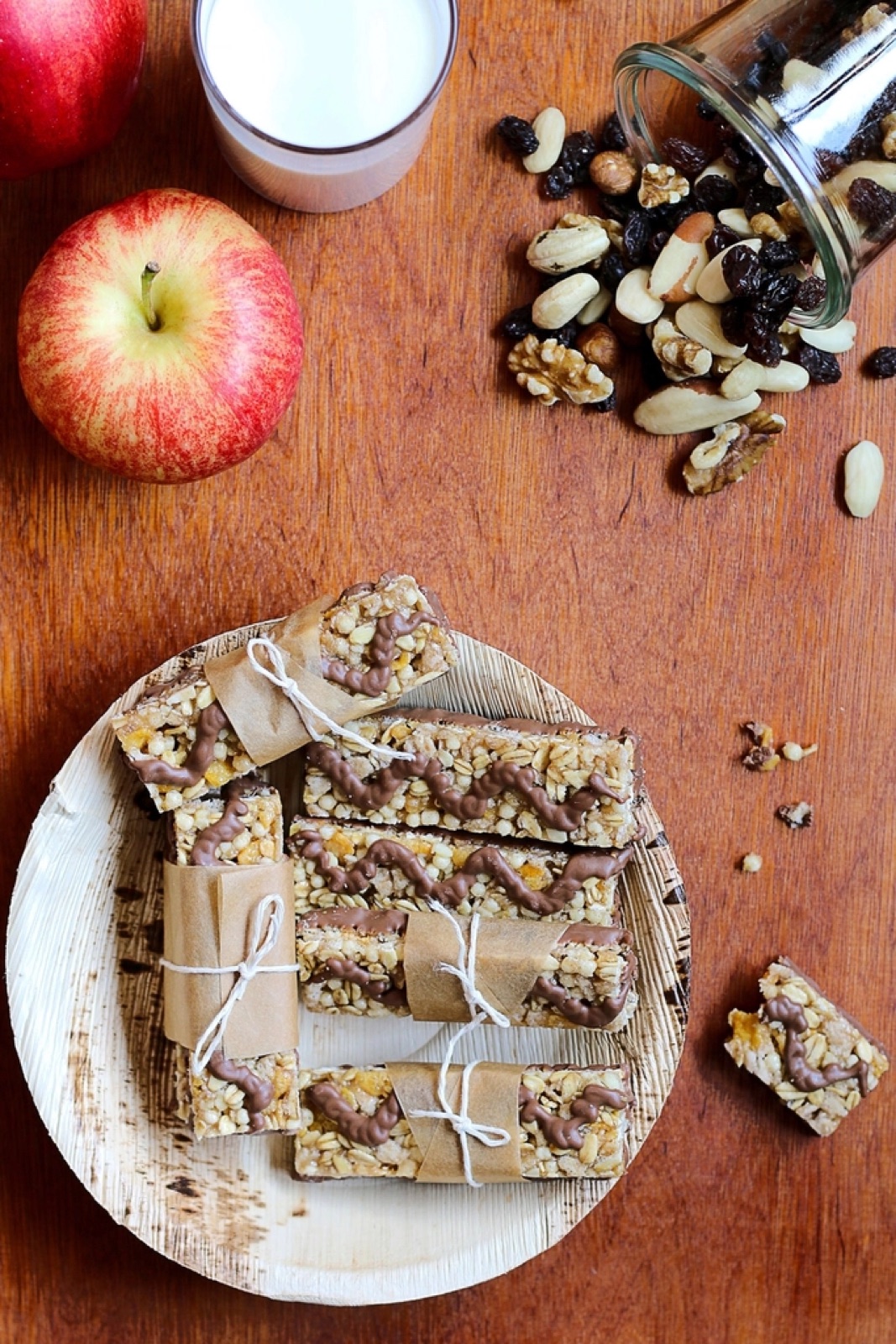
You don't need to cut out bars — just choose better ones: look for bars with more fiber than sugar per serving, or make your own mix of oats, nuts and dried fruit at home, where you decide how much sugar goes in. And whenever you're unsure how much sugar or how many calories something holds before you eat it, scan it with CalorIA Scan and compare before you decide.
Stop guessing your calories
CalorIA Scan reads your plate from a photo and gives you calories and macros tuned for real Mexican and Latino food — where generic apps get it wrong.
Get CalorIA Scan freeSources
- Harvard T.H. Chan — The Nutrition Source: Added Sugar in the Diet
- WHO — Healthy diet (free sugars recommendation <10% / <5%)
Keep reading
- 🧪AdditivesThat bright green in your chewing gum isn't "natural" — it's chlorophyll with copper
- 🍓MythsYour "light" yogurt can pack more sugar than a donut
- 🥚MythsDo eggs clog your arteries? What the science actually found
- 🥤Sweeteners"Zero" soda: why the WHO tells you not to use it to lose weight
This article is informational and not medical advice. Consult a doctor or registered dietitian before changing your diet, especially with a pre-existing condition.
Comments